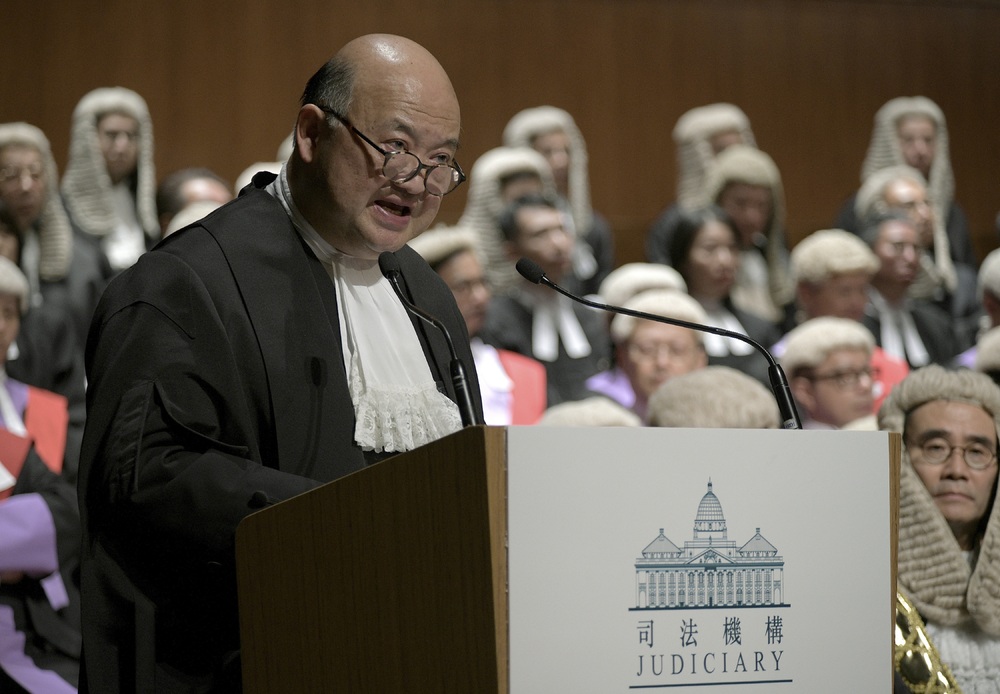
Hong Kong has many public bodies but one of the most secret - so secret it operates almost undercover - is the committee that controls the selection and appointment of judges.
As we all know, the pan-democrats, many lawyers among them, are getting hot under their collars about the arrival of the national security law and the selection of special judges who will enforce those laws.
So this seems to be an especially appropriate and opportune moment to look at the way Hong Kong's regular judges have been selected since time immemorial - which in Hong Kong's case means since the 1840s.
According to media reports, a national security commission chaired by the SAR chief executive is to be established in Hong Kong.
This is obviously a novel and undoubtedly important constitutional development, especially from a legal point of view, because it suggests the chief executive will have the power to appoint the judges who will hear cases concerning national security under the new law.
It is valid to ask how such a system compares with the existing selection system for judges and their junior tiers.
Judicial officers are appointed by the chief executive on the recommendation of a body called the Judicial Officers Recommendation Commission. As far as anybody knows, chief executives have accepted all such recommendations.
What and how much do we know about the JORC? Not much. It is a colonial relic - some would say a dinosaur - from the British days.
Like an espionage agency, its operations are shrouded in secrecy. According to the ordinance that established the JORC, it consists of nine members and is presided over by whoever is the chief justice.
Six of its members have legal qualifications and the remaining three are laymen. Beyond these basic facts, the public are not entitled to anything more.
What goes on in the JORC is strictly confidential and breaches of such privacy attract criminal sanctions. It is a criminal offense punishable by up to one year's imprisonment for a member of the JORC to disclose any information to the public. An even more serious criminal offense is committed by anyone who directly or indirectly tries to influence any member of JORC.
Compared to other powerful bodies, the JORC is in a class of its own. Even the Executive Council, which is the most powerful government body, is not protected by such powers.
The Executive Council, which advises the chief executive, sets the agenda for policies that affect all aspects of Hongkongers' lives, and yet it is not a criminal offense for an executive councilor to breach its confidentiality rules. There is no such legal sanction, only a moral and, I suppose, a political price to pay for breaches of confidentiality.
In 2012, an unofficial member of Exco, accountant Franklin Lam Fan-keung, resigned because he was privy to confidential decisions concerning increases in stamp duties on property transactions.
He unwisely sold two flats ahead of the public announcement of the increase in stamp duties. Had he breached the confidentiality of the JORC, he would probably have faced a criminal charge. At Exco, he merely resigned.
The reality is that the proposal for a national security commission is more representative of society than many other public bodies and certainly more than the JORC. The proposed commission will include at least 10 members as well as Hong Kong's secretaries for finance, justice, administration and security.
It is likely that the heads of the police and customs will also be included. Even if the chief executive were to be entrusted to appoint judges on an ad-hoc basis to hear national security cases, there is nothing fundamentally wrong with that.
The chief executive will inevitably consult widely. To suggest that such judges will not be independent or impartial is both presumptuous and patronizing.
Cheng Huan is an author and a senior counsel who practices in Hong Kong